Wednesday, January 19, 2022

Preservation Update: Salt Lake 17th Ward

A couple of blog readers have reached out to me to notify me that the Salt Lake 17th Ward chapel, built in the 1960s, will be leased to the American Heritage School to use for education.

The chapel itself was built in the 1960s and is not my favorite, although I like its use of gothic arches to match the historic stained glass that was moved from the beautiful chapel it replaced. However, with the lease of the chapel, the ward meeting there will be moved to a nearby building. The stained glass is apparently going to stay there while the building is used as a school.

As always, I mostly hope that the stained glass will continue to be used in a place where it can be enjoyed by the public. However, I'd also love to see it remain in a chapel, since it kickstarted a trend of putting first vision windows in other chapels around the valley.

Friday, December 10, 2021

Mesa 2nd Ward: Interior Details

 The building has a courtyard where you can access different classrooms.

A couple of stained glass windows are still on display in the chapel.

The off-center pulpit has some beautiful designs!

So do the columns that line the chapel:


Finally, the stage in the cultural hall has a striking design:

Sunday, November 28, 2021

Mesa 2nd Ward: Interior

I visited the Mesa 2nd Ward two years ago, but at that time couldn't get inside. This time when I visited Mesa I was able to document the interior.

And what a beautiful interior it is! A barreled ceiling descends to beautifully carved columns on the sides. At the front, the pulpit is off-center to the right while the sacrament table mirrors it on the right; behind, a beautiful vestry has organ pipes behind the grills.

Small stained glass windows are at the back and sides of the chapel. Other windows are above the columns, although some are blocked off from extensions to the building.


The cultural hall is perpendicular to the chapel on one side, so that's where the overflow is located.


I've got some more pictures I'll post soon.

Friday, November 19, 2021

Preservation Update: A Review of Lost Chapels

First, as has been noted on this blog by commentators, the Church has decided to keep the recently renovated Mesa Temple as a stationary presentation of the endowment. I have confirmed this with multiple people (although there is an altar in the creation room which makes it obvious). It seems that this decision was last-minute and boiled down to two reasons:

  • Some leaders (who? the temple presidency? area presidency? First Presidency?) felt the wheelchair ramps took too long to operate. The front of the rooms all have an elevated rostrum with a step, and one of the steps can convert to a ramp. (The Salt Lake Temple did this in the terrestrial room.) I can't imagine it really took that long.
  • Some leaders (again, who?) felt that having a session every hour was not often enough, and keeping a stationary presentation allows sessions every 45 minutes. 

While this development was discouraging, especially since the Church clearly put a lot of time and effort into making it so it could be progressive again--I'm just glad the renovation was done in such a way that progression could be restored very easily, if leaders become more sympathetic to the idea again. In the past year, the pendulum in terms of restoring original temple architecture and presentations has swung from hopeful to trying to limit the damage.

Second, there have been a few significant instances of chapels being razed or sold in the news recently that I wanted to review:

The Murray First Ward, which was no longer owned by the Church, was recently demolished.

The Payson First/Third Ward Chapel was sold this year, and the Church put a note in the contract saying that whoever bought the property was required to demolish the building. It was demolished in September. 

The Payson Second Ward, which is the oldest continuously used building in Payson and has some beautiful stained glass, was recently sold, and will likely be demolished soon.

The Ivans Ward (in Salt Lake City--1860 S, 300E), built in 1948, is being sold by the Church.

The Wells Ward, which apparently suffered some damage in the 2020 earthquake, recently had a farewell and will be sold by the Church. Some are worried the Church will insist that it be demolished as well.

The Logan Second Ward (which wasn't owned by the Church) was demolished.

The Farmington New Mexico Building, which has stained glass of Christ, was burned by arson and is still closed for renovation and repairs. Hopefully the stained glass is preserved. 

It's always disheartening to see how much historic architecture is still being demolished or sold. I anticipated that this trend will only continue, especially in areas of Salt Lake City and California where the presence of Church members continues to decline.

Wednesday, October 13, 2021

Preservation Update: Mesa Temple Renovation Completed

 The Church Newsroom published its article on the completion of the Mesa Temple Renovation this week, and it was exciting to look through! I have updated my original post that tours the temple with the new images, so I won't go through all of them here. However, I wanted to share my thoughts on how much I loved this renovation.

I loved how this renovation focused on restoring the temple to its original appearance. The Church renovations have been very good at this recently, getting rid of furnishings, paint, and changes that were made since the temple opening so that it focuses on how it looked at its original dedication.

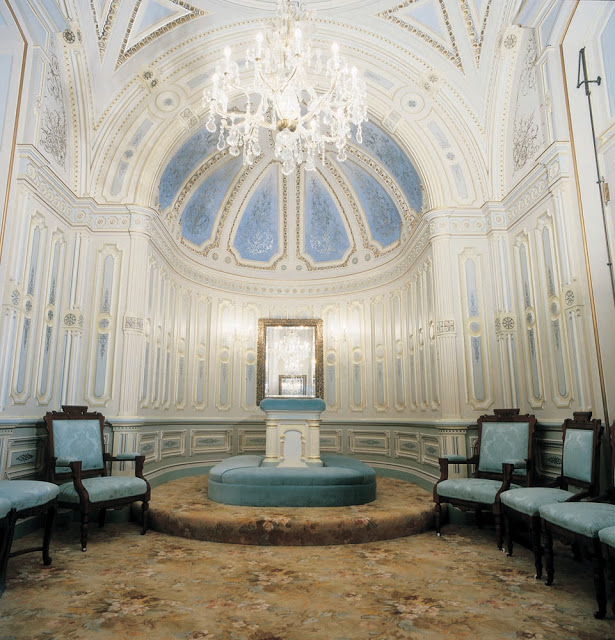
I loved how this renovation balanced modernization and restoration. The Mesa Temple had some heavy remodels that removed progression and most of the murals. This remodel restored progression and recreated the murals. Portions of the original murals that were saved were hung in the temple hallways so they could be honored. I think this was a wonderful idea. While it's a little sad that the few original portions of murals aren't in the endowment rooms anymore, the walls did have to come down to allow for utility improvements.

After the discouraging news of the Salt Lake Temple's remodel, which appears to have gotten rid of murals without a second thought, and the intention to do the same in Manti, the decision to instead preserve Manti's murals, along with the results of this remodel, are refreshing and encouraging. I hope the results would have some impact on the Salt Lake's remodel--perhaps encouraging them to recreate murals, as was done very well here. Even if they didn't do it, they should certainly keep some of the original murals and hang them in the temple, as was done here, so that they can still be seen and enjoyed in their original environment.

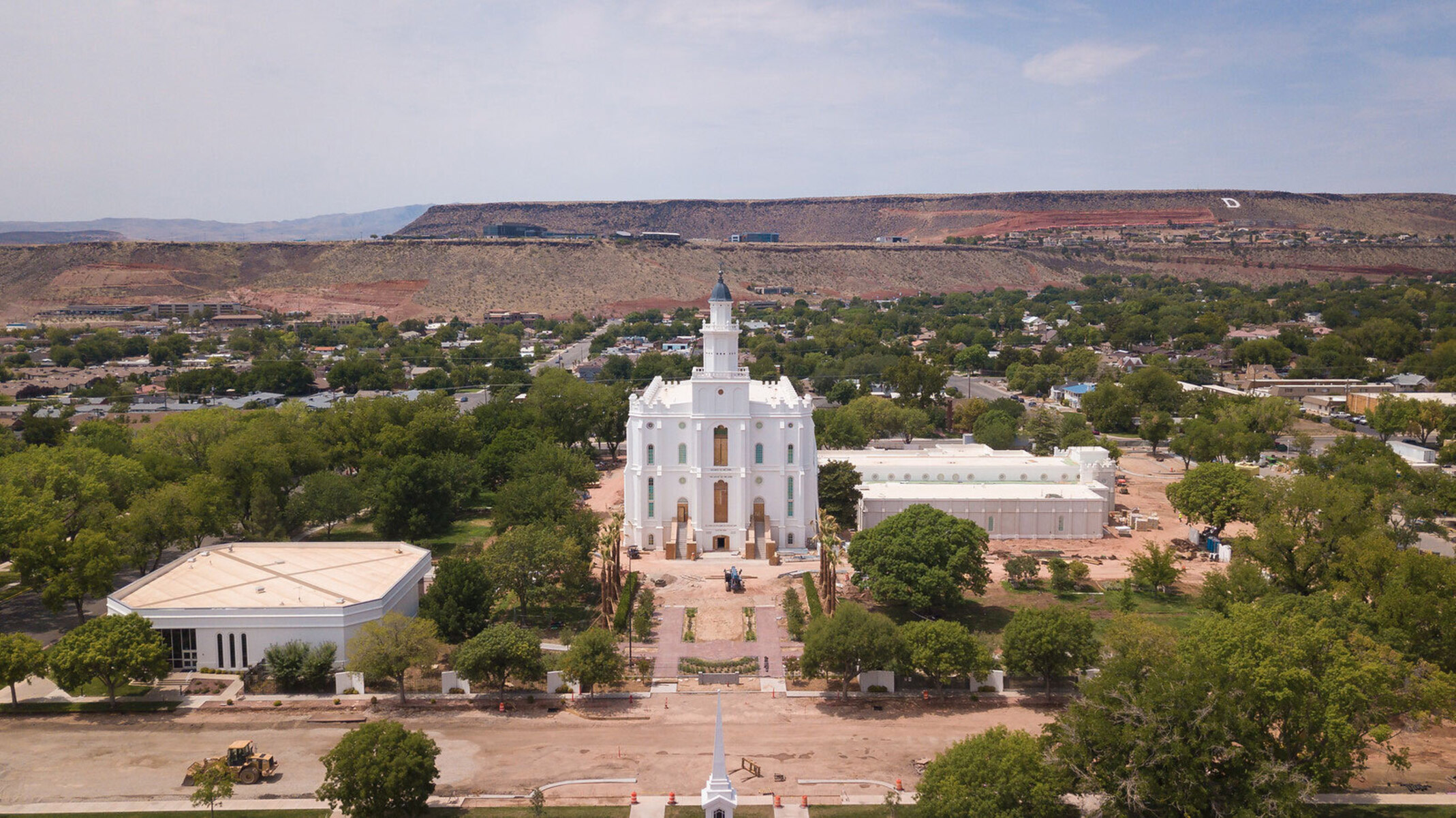
Meanwhile, the pioneer temple renovations continue. St. George is about halfway through its remodel that will also see its murals recreated:

(Image Source)

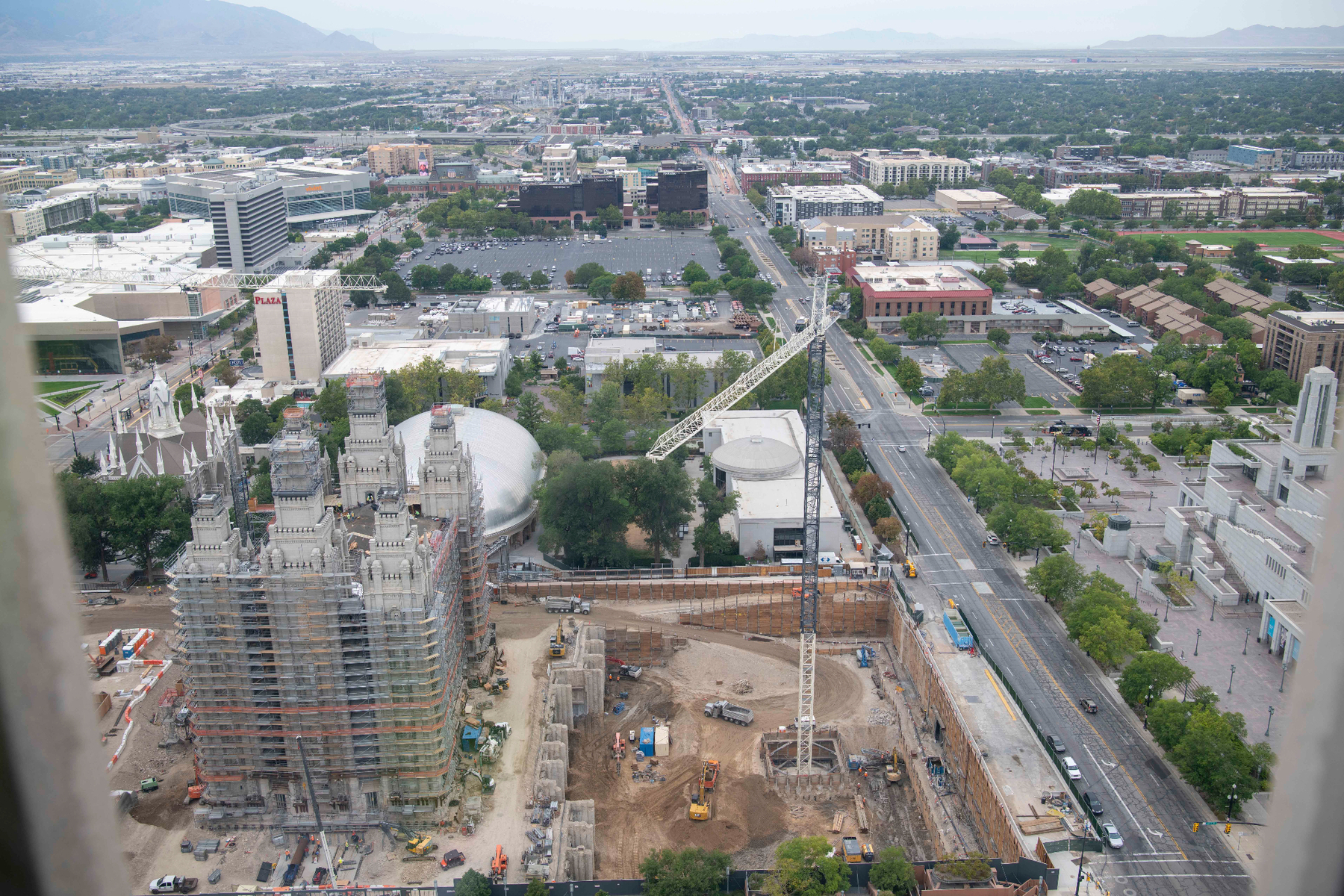
The Salt Lake Temple continues its heavy renovation, still at least 3 years away from completion:

(Image Source)

 And the Manti Temple has only just begun its 2-year renovation that will see its original floorplan and murals preserved, thanks to the efforts of members:


The only one we haven't heard anything about is Logan, which is the one I'm most intrigued about. President Nelson originally indicated a restoration would be in the work for some pioneer temples, which seems to be the case for St. George but certainly not Salt Lake nor the original Manti plans. I'm wondering if they will change their minds and basically keep Logan as is, or update it in some other way that is a little more sensitive to its pioneer history. We'll have to see.


Tuesday, September 28, 2021

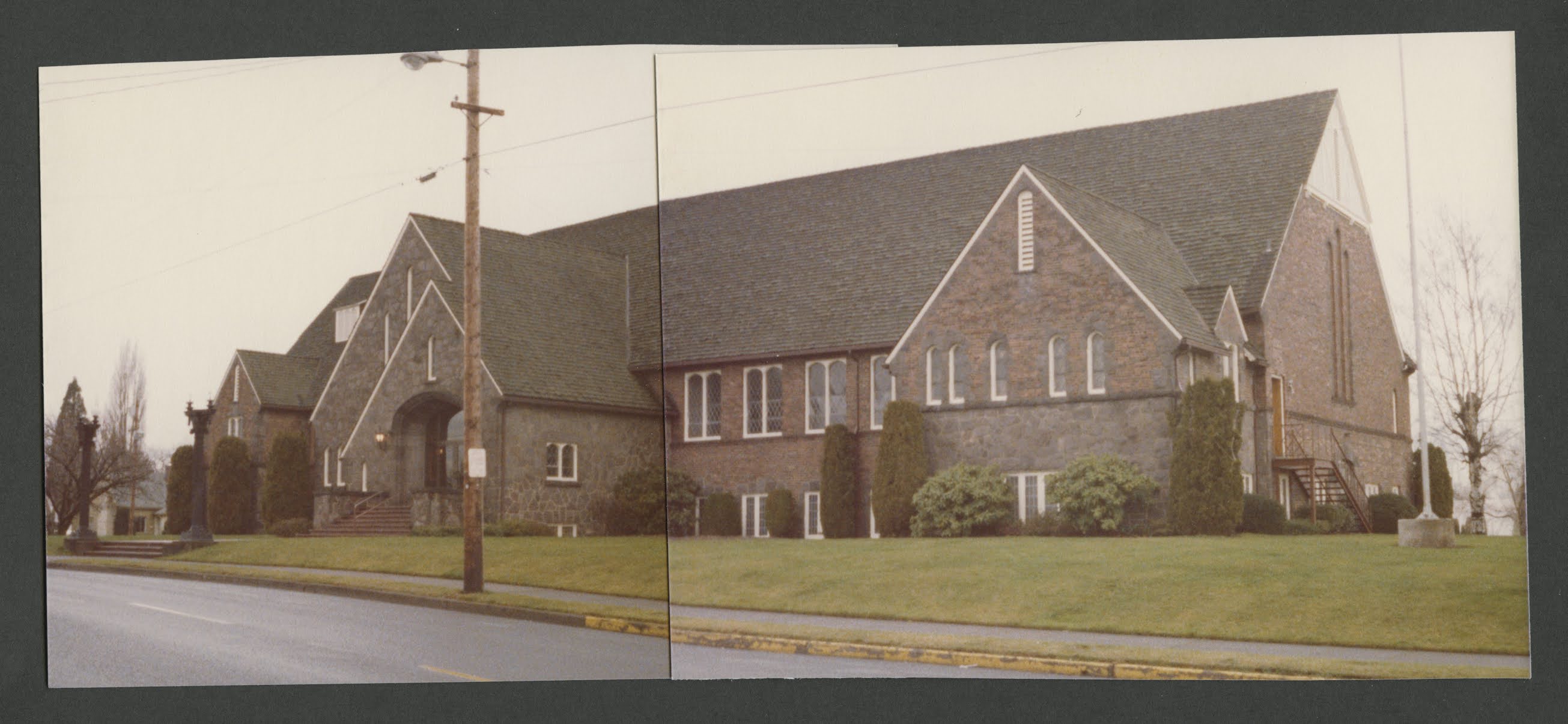
Portland Stake Tabernacle


 The Portland Branch Meetinghouse, also known as the Portland Stake Tabernacle, is a lovely tudorbethan style building that was completed in 1929. The original Portland Branch building, completed in 1915, was outgrown, and so this large building was completed, and the old building was sold to the local RLDS (now Community of Christ) branch.

This building still stands and it's lovely, although in 2019 the local ward stopped meeting here (I'm unsure if it was discontinued or relocated) and the building became a family history center (similar to what happened to the historic Las Vegas Ward).


(Image Source: Church History Library)


The building looks very much the same.

 
Fortunately, it appears that even the interior is relatively well preserved:
 
(Image Source: Church History Library)


The front of the building originally had a large mural, done by J. Leo Fairbanks, showing Christ watching over the armed forces. It was commissioned by the stake president in the 1940s, whose son died serving in WWII. The President used the money to commission the mural.

This beautiful building is another example of the issue many historic buildings face--they are located in inner-city areas, such as Las Vegas, Salt Lake City, and other areas, where LDS demographics are decreasing, as family-oriented members tend to move to the suburbs. Therefore, these older buildings, already threatened just because of the cost of their upkeep and maintenance, are even more at risk of their congregations being discontinued or moved and the building becoming useless. While I'm glad the building is still preserved as a family history center, it has been closed for nearly 2 years due to the pandemic, and even when it's used, that would hardly use much of a very large building.

In the past 7 years since I started this blog, several buildings that I documented have now been razed, sold, or abandoned. I plan to do a post in the upcoming month about these buildings.

Sunday, July 4, 2021

Preservation Update: Thoughts on Pioneer Temple Renovations

It's been an exhausting few months for those who follow the preservation of LDS architecture. I wanted to take an opportunity to recap my thoughts on the renovations thus far--it's been a roller coaster!

St. George

The first pioneer temple to begin renovations is the one in St. George. The 1970s renovation was so insensitive to the temple's original architecture that I was fairly confident this renovation would only make things better--and it does. The return of murals to the endowment rooms is extremely encouraging.


I'm still curious to see how many things turn out. For example, the rendering of the terrestrial room has no altar, which makes me concerned that the temple still won't have progression--that it will continue to employ the method of three stationary rooms feeding into a veil room. This would really be a missed opportunity if that were the case.

Other than that, I'm pretty excited to see the results.

Salt Lake

This temple renovation has definitely given us the most emotional whiplash. The original renovation plans and renderings promised a beautiful restoration; the Church's recent announcement to remove the murals, remove the original baptistry, and convert to stationary, film presentations, was extremely disappointing.

 This image taken from a recent Church news video shows the basement floorplan of the Salt Lake Temple before (at the bottom) and after (at the top) of the renovation. You'll notice that the entire western half of the temple floorplan, which currently has the baptistry, will instead have 2 new stationary endowment rooms.


Make no mistake--I understand the need for efficiency and standardization in the modern Church. However, this can be accomplished while preserving important cultural artwork. If the murals couldn't be preserved because of the condition of the plaster, they could be recreated (if not painted than digitally). Progression could be maintained even with a switch to film presentations. Stationary rooms could be added in addition to the original rooms, or the rooms could have kept their murals while serving as stationary rooms. The decision to remove them completely doesn't really have an adequate explanation.

With that being said, this is not another case of the Logan Temple being gutted. Besides the shifts for efficiency, the other parts of the temple look they are still being restored and taken care of. For example, compare the celestial room as it looked historically, as it looked just before it closed in 2019, and as it will look when it reopens:


Notice the restoration of color to the columns and patterns at their bases, wallpaper where the walls curve to meet the ceiling--it's definitely a restoration to historic details, although there are still some disappointing decisions (like the removal of the statue of the woman above the veil). This one will definitely have some mixed emotions from me when it reopens.

Manti

After not being able to attend Manti for nearly 3 years due to first a busy schedule and then a pandemic, I was able to go again this past week. Manti is a beautiful example of pioneer architecture that has been lovingly preserved, which is why the initial decision to remove its murals and convert it to stationary presentations was so horrifying. Manti is not built for stationary presentations, so not only would murals be removed, but walls and floors would have to come down to allow for a stationary arrangement. 

As I went through the temple, things seemed generally in good shape. The historic creation room mural (painted in 1886-7 by C.C.A. Christensen, although it's been touched up a lot since then) could definitely use some restoration. The garden room mural has some cracking on the east wall (the wall abutting up against the hill--this wall is notorious for having water damage, as this damage is what necessitated replacing the garden room mural in the 1940s). The world room mural looks very good, although some of the details near the bottom, especially of the north wall, could be restored. I'm anxious to see what's done here. There are a lot of stairs, and the Church will probably take steps to make it a little less overwhelming for those with disabilities. This might include adding ramps where there are stairs, stairs that could convert to ramps, or maybe even a lift in between the garden and world room (where the biggest staircase is).

The Church's transition from first announcing that the murals would be removed, to then announcing that the Teichert mural would be preserved and put on public display, and then announcing that the murals would be preserved as they are was certainly a roller coaster. Even as I worked to gather feedback for the Church, I was skeptical of any changes. I'm thrilled that they occurred, but Elder Rasband's insistence that the change to the Manti Temple plans were not at all influenced by public feedback and opinion, rather by the prayers of those in the area, were confusing, to say the least. It seems like he was saying that when we have concerns, we should not voice them and instead pray about them--if we live in the area; if we don't, they aren't as meaningful. Furthermore, since the original announcement was phrased as revelation, he seemed to condone praying for the Lord to change His mind. (And finally, his remarks that the preservation of the temple caused rejoicing on both sides of the veil also seemed to me to suggest that the original announcement caused sorrow on both sides of the veil.) All of this is not to serve so much as criticism as to point out that the Church's efforts to discourage feedback and protest cause some theological roller coasters for concerned and faithful members.

Logan

Logan is the last of the pioneer temple renovations, and to be honest, it's a wild card for me at this point. When temple renovations were first announced in April 2019, he said that "these pioneer temples will soon undergo a period of renewal and refreshing and, for some, a major restoration." I almost certainly felt he was referring to the Logan Temple when he talked about a major restoration, and was picturing the return of progression and murals in the modified floor plan. Now I'm not so sure. If leaders were so willing to remove historic murals in Salt Lake and Manti, I have a hard time seeing them making major efforts to restore murals already removed up in Logan. We'll have to see where this one goes.


Conclusion  

More than anything, the shift in the renovations, including the removal of murals and progression in Salt Lake, really indicate that Church leaders do not value the murals and progression as much as previous Church leaders did between 1980 and 2010. Prior to 1980, the emphasis was so much on efficiency that progression (and in some cases, murals) were removed from Laie, Mesa, Los Angeles, Logan, and St. George. Between 1980 and 2010, progression (and sometimes murals) were painstakingly restored in most of these temples. The most recent example is Mesa, which has been lovingly renovated including restoring portions of original murals and recreating lost portions and restoring progression. At the same time this renovation was finishing up, the Church was announcing the removal of these elements in Salt Lake and Manti in the name of efficiency. This means that the future is much more hazy. What if Cardston needs a renovation soon? Will its murals be removed?

Additionally, the Church's decision to frame the initial announcement of the removal of murals as "the Lord's hand guiding us" certainly had a silencing effect on membership and caused some division. This made it difficult for those who wanted more preservation to voice their opinion without being accused of apostasy. The radical change in Manti's case also seemed to cause confusion from some members who thought they were defending revelation. This is not a theological blog, but I strongly feel that members should be able to advocate for pioneer temples without fear of spiritual retribution. 

I think we as a Church need to be careful not to lose sight of the value of these architectural features. The temple is certainly not a museum--its purpose is saving ordinances for the living and the dead. (This is also why calls to turn the Manti Temple into a museum or useless. The Church cannot justify such a large expense on something that does not further its important mission, and what's more, the art's value is tied inextricably to the ordinance themselves.) However, this does not mean that all architectural features are worthless, or not needed. Simply put, progression and murals heighten the experience of the endowment. So does the live endowment. If this cannot be done in all temples (and it isn't), it should at least be preserved in the temples where it existed.

For now, I have mixed feelings on the renovation efforts as we move forward. I still faithfully sustain our Church leaders and am excited to see how they guide the Church moving forward, but the fact is that a shift has occurred, and it makes the future of pioneer architecture much more uncertain.