Tuesday, July 12, 2016

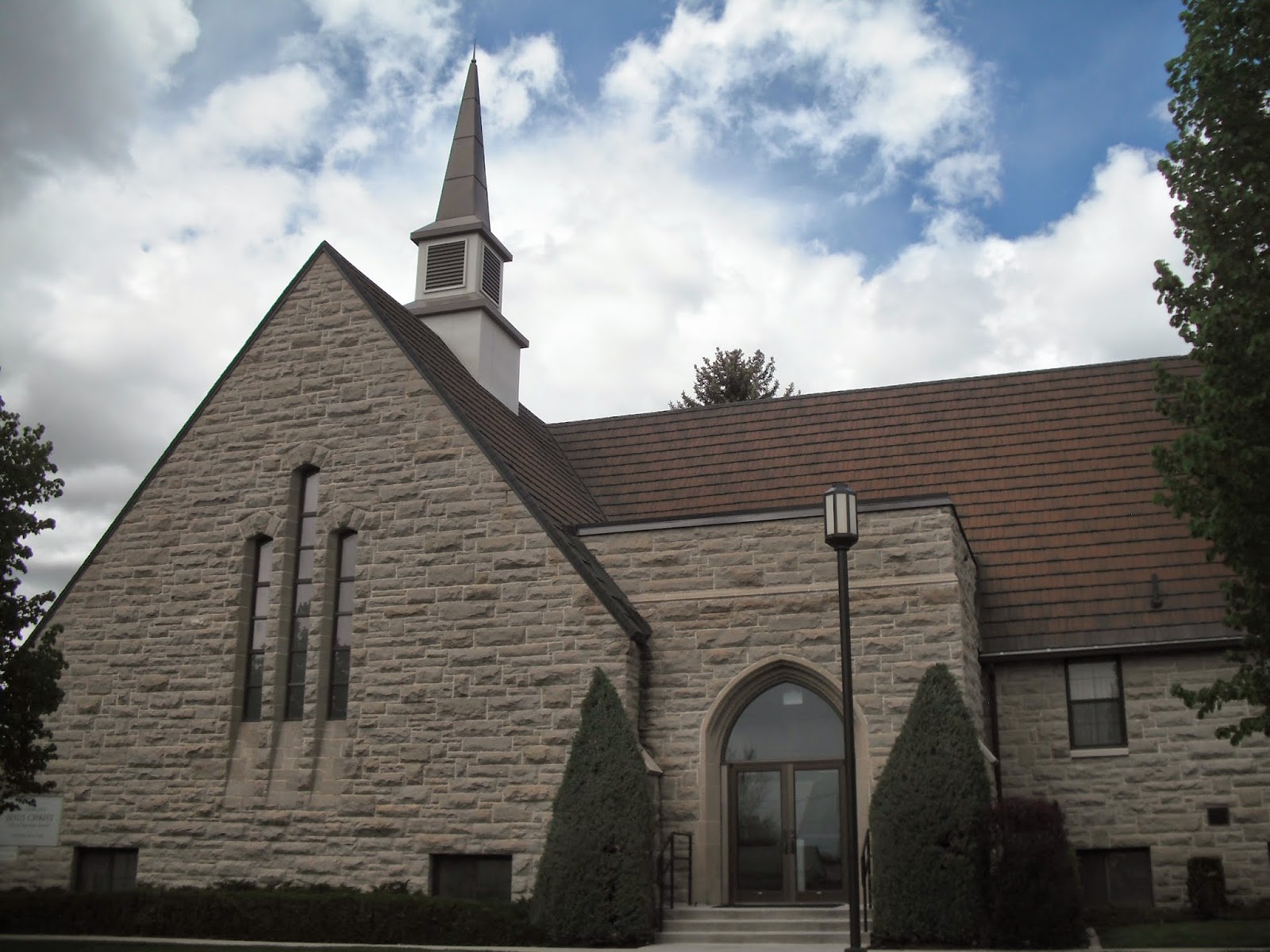
Bonneville Ward

Built in the late 1940s, the Bonneville Ward has some really nice architectural features. I liked the design of this steeple and its weather vane.


Interior pictures are coming soon.

Tuesday, July 5, 2016

Logan Institute: Interior


I had hoped that you would be able to see the stained glass on the exterior of the chapel from inside, but obviously that's not the case. It makes me wonder if it was visible at one point--this chapel has been remodeled extensively. Even so, I like the unique organ pipes, and the chapel retains a nice historic feel. It's still used regularly for worship services, as well as classes.

Thursday, June 30, 2016

Lehi Fourth Ward: Stained Glass Details

Members of the ward in this chapel were very patient as I took tons of pictures and even turned out the lights at one point (sacrament meeting was over.)


The focal point of the window is a beehive, surrounded by two vases of flowers.


Even the details behind the beehive are stunning. Clouds, a blue sky, small trees.


The gothic arches of the window really captured my attention, too.


One window can make all the difference.

Tuesday, June 28, 2016

Ogden Sixth Ward

Constructed in 1910, the Ogden 6th Ward is a beautiful building.

Here's what it looked like originally.
(Image Source: Church History Library)
Unfortunately, the building has been vacant since the early 1980s, and it's in poor condition today.


I did catch a peek of some interior molding through a broken window.


Sunday, June 26, 2016

Lehi Fourth Ward: Stained Glass Window

As stated in my last post, this is the original window from the Lehi Fourth Ward's chapel.


It's stunning! Every other aspect of this chapel is modern, but this window really makes the chapel a beautiful place to worship. It's lit electronically from behind.


There is too much to highlight in this window for one post. My next post will have close-up details of almost every aspect of the window. I really loved having the opportunity to see it.

Thursday, June 23, 2016

Lehi Fourth Ward

There's a bit of a story behind the next couple of posts on the Lehi 4th Ward. This beautiful structure originally stood here, in northeast Lehi:

(Image Source: Church History Library)

It was constructed in 1912-1913. In 1952, it underwent extensive renovations, which included additions on the building's north side (the right of the photo.)

The stained glass (visible in the photo) was at the back of the chapel; at the front was a large painting of Christ. The basement was one large room that could be separated into classrooms with curtains.

The building was demolished sometime after 1985. After some research, I was told that the stained glass had been placed in the building that replaced it on the same site. Eagerly, I went to the new chapel.


 However, this is what I found:


The organ is lovely, but there was no trace of the stained glass window. I combed the entire building, and finally asked the local bishopric about their knowledge. It turns out the stained glass window had been transferred to a building a few blocks over, which houses the Lehi Sego Lily Ward.


Unfortunately for me, the building was closed for cleaning for a couple of months. Luckily, you won't have to wait that long--I'll show the window and details of it in my next posts.

Tuesday, June 21, 2016

Fairview North Ward

 I love the exposed rock on this chapel. It was constructed in the 1930s.


This chapel has the same floor plan as the Cedar City First Ward, with some obvious differences--no clock tower (and originally, no steeple at all), the gray stone instead of the colorful rock of Cedar City, and a few other changes. The Cedar City chapel is generally considered more significant, because of its use of local materials; however, this building has a more stately appearance because of its use of gray stone.


This portion on the left (west) side of the building is the cultural hall. The chapel runs east from there.


A Bishop's office was located here, accessible from an exterior door and from the chapel itself.